Guides · Plants and rooms
Grow a timelapse, one photo a day.
A seedling, a houseplant coming into flower, a garden through a year, a room being done up. Things that change over days and weeks make the best timelapses, and all they need is your phone and the same spot each time. This guide covers how often to shoot, how to keep the phone in place without a tripod, and the light.
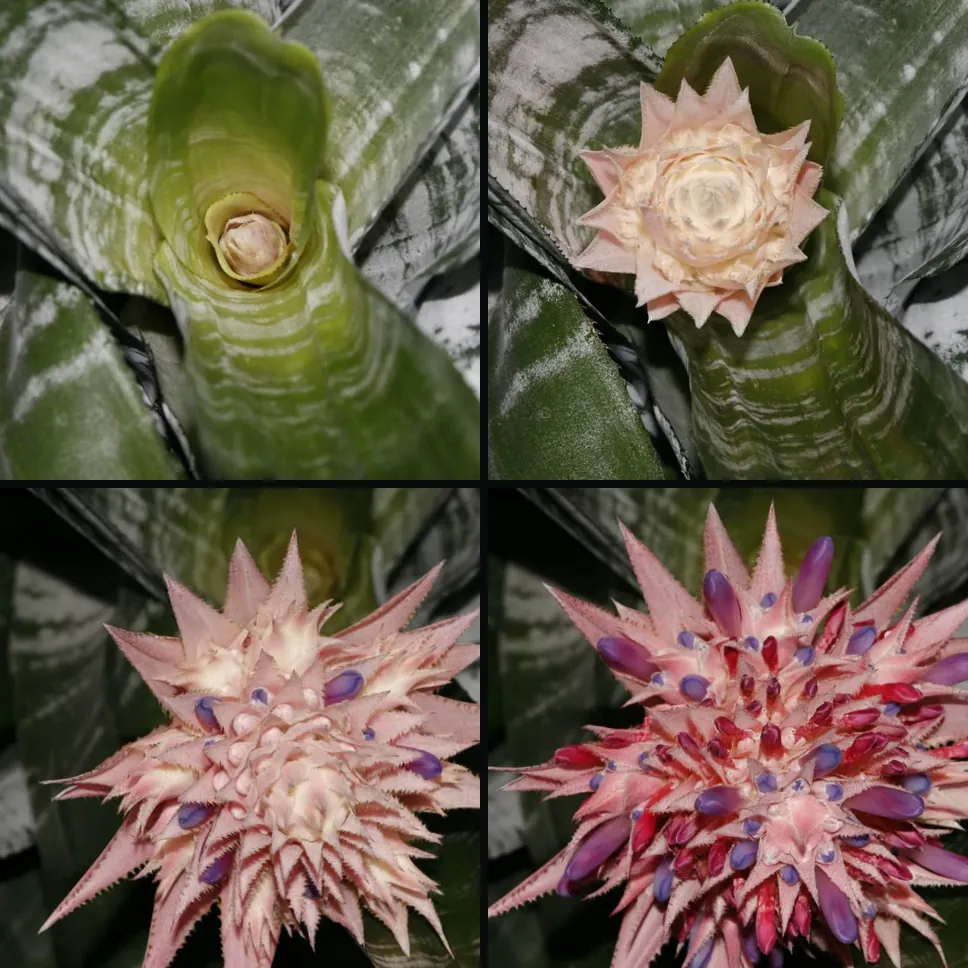
Pick something that changes over days
A photo a day suits things that change a little every day and a lot every month. Here is a rhythm that works for each, and what it makes in Becoming at Auto, the pace a first video starts on:
| What | Changes over | Take a photo | For | First video |
|---|---|---|---|---|
| Seedlings or sprouts | Days | Every day | 3 weeks | 16 s, from 21 photos |
| A houseplant coming into flower | Day to day, over weeks | Every day | 2 months | 29.8 s, from 59 photos |
| A room being done up, a build | Weeks to months | Once a week | 6 months | 18.5 s, from 26 photos |
| A garden through a year | Weeks and seasons | Once a week | A year | 28.9 s, from 53 photos |
Lengths from Becoming's own maker, the end card included. The timelapse length calculator has every other rhythm.
Not a photo a day: a flower that opens in one evening changes in hours. That needs your phone camera's Time-lapse mode, filming on a stand for the whole evening. The smooth sprouting films online are made that way too: adege's tray of sunflower sprouts, by its own description, took one shot every 4 minutes for ten days. A photo a day is a different thing. It steps from day to day instead of flowing, and the steps are the record of each day you showed up.
Keep the phone in the same place, without a tripod
A timelapse lines up when the phone is in the same place every day. Becoming's camera puts it in four words for a plant: “Same pot, same window.”
- Mark the pot. Two small marks on the sill for where the pot stands, and one on the pot for the side that faces you. A plant on a sill leans toward the light; turn the pot a different way each day and it plays as a plant spinning.
- Give the phone a home. The same shelf, a stack of books, a jar, the edge of the window frame. Same height, same lens (1×, not the wide one), and decide once between upright and sideways.
- Leave room to grow. Frame day one with space around the plant. A seedling that fills the frame on day one is out of it by day twenty.
- Match yesterday. Becoming fades your last photo over the viewfinder, so you can line up the rim of the pot and the edge of the sill before you shoot.
Afterwards, Becoming compares what is in each photo and shifts it into line where it finds a match, as far as the photo's edges allow. It moves photos; it does not turn them, so the marks do the rest.
The same hour, the same light
Daylight through a window changes with every cloud and with the season, so take the photo at the same hour each day. If your day does not allow that, shoot after dark under one lamp in the same place: steadier than any window. Keep the flash off; it flattens a plant and lights the pot more than the leaves.
Some flicker is left in any series by hand. Becoming measures how bright each photo is and nudges it toward the rest, never more than 38% brighter or 28% darker, so a sunny day does not flash. Why it flickers, and the fix has the detail.
What a houseplant month looks like
Most days, nothing seems to happen. That is normal, and it is why the photo matters more than the look you give the plant: the change is too slow to see from one morning to the next, and plain in a row of photos. The bromeliad above was filmed over 54 days, two photos a day, and the last frame above is from about two thirds of the way through. Taken once a day for 2 months, a plant like it makes 59 photos and, in Becoming, a first video of 29.8 s.
Missed a day? Nothing breaks: the next photo is a longer step, and the video plays on. Going away? Switch on Away for the project in the reminders, and those days count as away, not missed.
Not a plant: a room, a build, a garden
Anything that stays in one place works the same way. Pick one spot, aim the same way, and come back to it. For a build, Becoming's camera says “Whole thing in frame.”; for a garden, “Same spot, same time of day.”

A room is harder, because it is tempting to photograph whatever changed today. That makes a good record of a job, and a series that will not play as a timelapse:
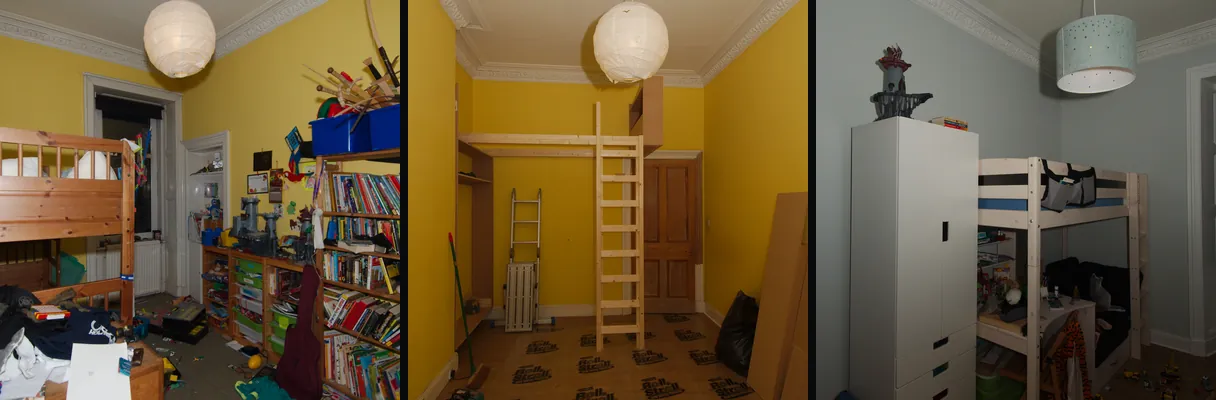
For a timelapse of a room, the camera says “Same corner, same light.” Stand in the doorway, or in the corner that sees the most of the room, and let the work come into the frame.
Turn it into a video
In Becoming, pick what it is (a plant, a room, a build, a garden) and take each day's photo with the camera, or choose “Use photos I already have”: the app reads each photo's date and puts them in order. Press play, and the photos are lined up, the light evened, and the pace picked for the number of photos. To show a few days as one still picture instead, the week-by-week photo grid puts up to twelve in date order, in your browser. And progress photos you can actually line up goes further into the spot, the light and doing it alone.